


How often do rails need to be replaced?
Jan 22, 2026
A steel rail is an engineered structural profile that balances strength, hardness, and toughness to resist surface wear, rolling contact fatigue, and impact loads, ensuring long-term performance in both railways and industrial tracks. GNEE RAIL supplies rails covering all major standards such as BS11, GOST, ISCOR, DIN, and UIC, with a wide range of specifications including crane rails, heavy rails, and light rails, and offers full-service capabilities: cutting, milling, hole-drilling, surface treatment, testing, and international shipping coordination.

| Standard | Sepc. | Material Typical Grade |
| UIC860 | UIC54 | 700,900A,900B |
| UIC60 | ||
| EN13674.1 | 5.00E+02 | R200,R350HT,R260Mn,R35LHT,R320Cr,R370CrHT |
| 5.40E+02 | ||
| 6.00E+02 | ||
| 6.00E+03 | ||
| BS-11-1985 | BS80A | 700,900A,900B |
| BS90A | ||
| BS100A | ||
| AREMA | 115RE | SS,HH,LA,IH |
| 136RE | ||
| ASCE60 | U71Mn | |
| ASCE85 | U71Mn | |
| GB 2585-2007 | 50kg/m | U71Mn |
| 60kg/m | U75V | |
| 75kg/m | ||
| TB/T2344-2012 | 50kg/m | U71Mn,U75V,U77MnCr |
| 60kg/m | U78CrV | |
| 75kg/m | ||
| GB 11264-1989 | 8kg/m | Q235 |
| 12kg/m | Q235 | |
| 15kg/m | 55Q, Q235 | |
| 18kg/m | 55Q, Q235 | |
| 22kg/m | 55Q, Q235 | |
| 24kg/m | 55Q, Q235 | |
| 30kg/m | 55Q, Q235 | |
| 38kg/m | 50Mn, U71Mn | |
| 43kg/m | 50Mn, U71Mn | |
| GB Crane rails | QU70 | U71Mn |
| QU80 | U71Mn | |
| QU100 | U71Mn | |
| QU120 | U71Mn |
How often do rails need to be replaced?
Rail replacement frequency varies wildly, from every few years on heavily used, curved sections to decades (30-100+ years) on lightly used, straight lines, depending on traffic volume, train weight, curvature, and environmental conditions, with modern, high-speed lines potentially lasting 10-30 years before significant replacement, while lighter usage can extend life considerably.
Factors Influencing Rail Lifespan:
- Traffic Volume & Weight: Heavier, more frequent trains cause much faster wear, especially on curves.
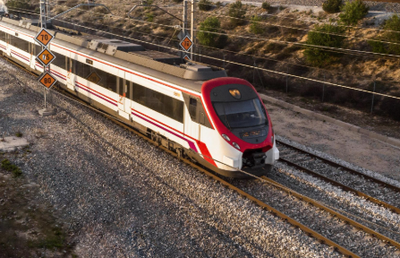
- Curvature: Sharp curves wear rails out significantly faster (e.g., every 2-3 years) than straight track.
- Rail Steel Quality: Harder steels (like R400 for high-speed) last longer (up to 30 years) than softer ones, but can increase wheel wear.

| Grade | Standard / Region | Typical Composition (wt%) |
| R260 | EN 13674-1 (Europe) | C: 0.67–0.80, Mn: 0.90–1.20, Si: ≤0.50 |
| R350HT | EN 13674-1 (Europe) | C: 0.75–0.85, Mn: 0.80–1.20, Cr: 0.20–0.50 |
| Grade 260 | AREMA (North America) | C: ~0.77, Mn: ~1.0–1.2, Si: ~0.2 |
| Grade 350 | AREMA + Mill Specs (USA/Canada) | C: 0.78–0.83, Mn: 0.90–1.20, Cr: 0.2–0.6, + V/Nb (microalloyed) |
| BH Rail (Bainitic) | JIS E 1101 (Japan), adopted in EU/India | C: 0.65–0.80, Mn: 1.0–1.4, Cr/Mo/Ni (optional, mill-specific) |
| U71Mn | GB/T 2585 (China) | C: 0.65–0.77, Mn: 1.10–1.40, Si: 0.15–0.35 |
| U75V | GB/T 2585 (China) | C: 0.67–0.77, Mn: 0.70–1.00, V: 0.04–0.12 |
- Environmental Factors: Salt, humidity, and corrosion can shorten rail life.
- Maintenance: Regular inspection, tamping, and targeted repairs extend life, while neglect shortens it.
Examples of Lifespans:
- Heavy Traffic Curves (Subways/Mainlines): 2-10 years.
- High-Speed Lines: 10-30 years (depending on steel).
- Mainline/Suburban Lines (General): 30-40 years is a common estimate.
- Lightly Used Lines/Sidings: Can last 50-100+ years, even with very old rail.
Key Features of steel rail
Key features of steel rails include high strength, durability, and wear resistance, essential for supporting heavy loads and continuous impacts, alongside precise dimensional accuracy for smooth train operation, fatigue resistance for longevity, and specific alloy compositions (like manganese/silicon) for tailored performance, often with corrosion protection and good weldability for installation and maintenance.

- High Strength & Hardness: Ability to withstand immense weight, impacts, and deformation, with high yield and tensile strength.
- Wear Resistance: Specific steel alloys (e.g., U71Mn, R350HT) resist abrasion from constant wheel-rail contact, extending service life.
- Fatigue Strength: Engineered to endure repeated stress cycles from heavy train traffic without failure.
- Toughness & Ductility: Resistance to brittle fracture, especially important in cold conditions, balanced with hardness.
Since 2008, GNEE RAIL has been supplying steel rails of different grades for more than 18 years, steel rails from GNEE is highly recommened in China and abroad.Wtih cutting edge equipment, GNEE produces high quality steel rails that meet with requirements of most countries. Standard rail, head hardened rail, heavy rail,light rail,crane rail and other types are all available here, as one of the China main rail supplier, GNEE RAIL has been working on supplying economical green railway products all over the world.


