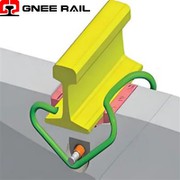
Under what circumstances is the use of Grooved Rail Pads mandatory?
Nov 25, 2025
Under what circumstances is the use of Grooved Rail Pads mandatory?
The use of grooved rail pads is mandatory in systems with high axle loads and speeds, or where there are special requirements for vibration damping and noise reduction, such as in urban metro, high-speed rail, and tram systems. They are also essential for grooved rail applications, like those used in street-level tram tracks or harbor and industrial tracks, where the pad must fit the unique rail profile. In these cases, the pads are used to absorb shock, reduce wear on the tracks, and ensure electrical insulation for signaling systems.

Key circumstances for mandatory use
- High speeds and heavy loads: Systems with high-speed trains and heavy axle loads require the superior stiffness and vibration absorption of grooved rail pads to ensure track integrity and passenger comfort.
- Urban environments: For metro and light rail systems in cities, grooved rail pads are mandatory to reduce noise pollution and vibration that could affect nearby infrastructure and residents.

- Grooved rail profiles: These pads are designed specifically for grooved rails used in tramways and other street-level track applications to maintain a proper fit and function.
- Industrial and harbor tracks: The unique requirements of industrial and harbor environments also necessitate the use of grooved rail pads to handle the specific loads and track conditions.
- Specific fastening systems: Certain advanced fastening systems, designed for high performance and safety, may specify grooved rail pads to meet their design requirements for structural stability and fatigue resistance.

- Electrical insulation: In situations where track circuits for signaling are in place, rubber rail pads are used to provide electrical insulation between the rail and the sleeper, preventing interference with the signaling system.
Materials for rail pads
Rail pads are elastic polyurethane mats which are interposed between steel rails and railway sleepers to protect the sleeper top from wearing and impacting.

HDPE
| Technical Parameter | Unit | Technical Requirement | Value |
|---|---|---|---|
| Density | g/cm3 | 0.95-0.98 | 0.95 |
| Tensile Strength | Mpa | ≥19 | 19 |
| Elongation | % | >80 | 150 |
| Melting Point | °C | 170-190 | 190 |
| Insulation Resistance | Ω | ≥1×10¹⁰ | 3.5 ×10¹⁰ |
| Hardness | A | ≥98 | 98(A) |
EVA: Polyethylene 80%, Vinyl Acetate 20%
| Technical Parameter | Unit | Technical Requirement | Value |
|---|---|---|---|
| Density | g/cm3 | 0.95-0.98 | 0.95 |
| Tensile Strength | Mpa | ≥15 | 16 |
| Elongation | % | >500 | 550 |
| Melting Point°C | °C | 170-190 | 170 |
| Insulation Resistance | Ω | ≥1×10¹⁰ | 5.0 ×10¹⁰ |
| Hardness | A | ≥90 | 92(A) |
Rubber
| Technical Parameter | Unit | Value |
|---|---|---|
| Stiffness | KN | 90-130 |
| Hardness Shore A°C | °C | 72-80degree |
| Electronic Resistance | Ω | ≥ 106 |
| Tensile Strength before Aging | Mpa | ≥12.5 |
| Elongation before Aging | % | ≥250 |
As a professional rubber rail pad manufacturer GNEE RAIL can produce various standards of rubber rail pads and other rail fasteners. If you want to build a railway line, do not hesitate to contact us, we can supply all types of rubber rail pads with different materials. If necessary, we can make customized rubber rail pad production.