What are the applications of Rail Pads in the Rail Fastening System?
Nov 26, 2025
What are the applications of Rail Pads in the Rail Fastening System?
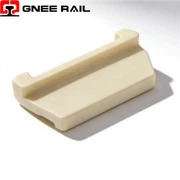
Rail pads are applied in rail fastening systems primarily to reduce shock and vibration, prevent wear on the rails and sleepers, and distribute loads. They are elastic components placed between the steel rail and the concrete sleeper to protect the track components, absorb impact, and improve noise reduction.

Key applications of rail pads
- Vibration and shock absorption: Rail pads reduce the impact and vibration caused by trains, protecting the sleepers and the surrounding infrastructure. They can diminish shock loads by providing compliance and absorb resonant vibrations excited by the concrete sleepers.
- Load distribution: They spread the load over a larger area of the sleeper, preventing load concentration and the resulting fatigue stress on the track components.
- Protection of components: By absorbing impacts and vibrations, rail pads protect the concrete sleepers from abrasion and crushing. They also protect the bottom of the rail and the sleeper's surface.

- Noise reduction: The pads help to dampen the noise generated by trains, which is particularly beneficial in urban areas like metro and tram lines.
- Sealing: They can create a seal between the bottom of the rail and the sleeper, which helps prevent dirt and water from getting between the components.
- Adaptability: Different types of pads with varying stiffness can be used to adapt the track system to different requirements, such as high-speed rail or urban transport. They can also accommodate uneven contact surfaces between the rail and the support.
- Electrical insulation: In some systems, rail pads (or sometimes rail insulators) are used to provide electrical insulation between the rails and the sleepers to protect signaling systems from short circuits.

How are rail pads manufactured?
Rail pads are manufactured through a process of mixing polymers or rubber with other materials, followed by shaping using methods like compression molding or injection molding, and finally curing to harden them. For specific geometries or multi-layered pads, a two-step process may be used where a plain pad is first created and then the surface features are pressed in with a heated die.

GNEE RAILWAY RAILWAY is equipped with rail pad production lines for 130sets of machines, for the whole process of injection, refining rubber, sulfuration, moulding and inspection, etc. We own the most engineers for rail pad development, design, production and inspection, with annual production capacity reaching up to 2000, 000 pieces. What's more, rail pads for high speed rail lines are our featured products, including both the elastic rubber plates and height adjustment pads.