What Is a Mine Railway Called? Narrow-Gauge Industrial Rail Systems
Jan 22, 2026
What Is a Mine Railway?
A mine railway is a narrow-gauge industrial railway that carries ore, coal, waste rock, supplies and sometimes personnel inside underground mines or across surface mining areas. Because tunnels are tight and loads are modest compared with mainline railways, mine railways use narrow gauge and light rail sections.
Different Names for Mine Railways
Mine railway / mining railway: the general terms
Pit railway or colliery railway: coal mines in the UK tradition
Underground railway: the underground portion of the mine haulage system
Industrial railway / tramway: any non-mainline freight line within a plant or mine
Field railway: movable temporary lines in surface mining
Gauges Used in Mining
Mine railways are built to narrow gauges to fit small tunnel sections. The most common are 600 mm and 762 mm; 900 mm is used in some older systems, and 1,000 mm metre gauge appears in larger mines. The locomotive and wagon fleet, not the rail alone, determines the gauge chosen.
Rail Sections for Mine Railways
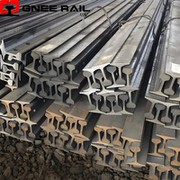
China's GB 11264 light rail standard covers 8, 12, 15, 18, 22, 24 and 30 kg/m sections, which are the standard choice for mine haulage.
| Section | Height (mm) | Head (mm) | Foot (mm) | Weight (kg/m) |
|---|---|---|---|---|
| 8 kg/m | 65.0 | 25.0 | 54.0 | 8.42 |
| 12 kg/m | 69.85 | 38.1 | 69.85 | 12.2 |
| 15 kg/m | 79.37 | 42.86 | 79.37 | 15.2 |
| 18 kg/m | 80.0 | 40.0 | 80.0 | 18.06 |
| 22 kg/m | 93.66 | 50.8 | 93.66 | 22.3 |
| 24 kg/m | 107.0 | 51.0 | 90.0 | 24.46 |
| 30 kg/m | 107.95 | 60.33 | 107.95 | 30.1 |
Steel Grades for Mine Rail
For light service and surface use, Q235 structural carbon steel is common. Where impact and wear are higher, 55Q and 50Mn are used; main haulage and incline tracks in large mines use U71Mn for better wear resistance. The grade and heat treatment are matched to the tonnage and gradient of the mine.
Track Construction in Mines
Mine track is laid on timber or steel sleepers, fixed with spikes or clips, and ballasted with crushed stone or mine waste. In steep drifts, rack systems or cable haulage replace adhesion working, and the rails must be anchored against creep.
Frequently Asked Questions
What gauge do mine railways use?
The most common mine gauges are 600 mm and 762 mm; 900 mm and 1,000 mm are also used. The gauge is chosen to fit the tunnel size and the rolling stock.
What rail sections are used in mines?
Light rail of 8-30 kg/m per GB 11264, with heavier sections of 38 kg/m and above for main haulage in large mines.
What is a pit railway?
A pit railway (colliery railway) is the narrow-gauge railway serving a coal mine, either underground or on the surface, moving coal and waste between workings, shafts and processing plants.
Can standard-gauge rail be used in mines?
Surface mines and some large underground systems use heavier rail such as 38-50 kg/m, but inside tunnels light sections are preferred because they are easier to lay, curve and re-align.
What steel grade is best for underground mine rail?
For moderate traffic, 55Q or 50Mn gives a good balance of cost and wear resistance; for high tonnage, wet conditions and steep gradients, U71Mn gives longer life.