What is OTM in rail?
Jan 28, 2026
Rail fasteners are critical structural elements that bind rails into the track framework, ensuring controlled stiffness, reliable load transmission, and durable fastening performance across diverse operating conditions. They serve as the mechanical foundation of rail infrastructure integrity.

GNEE RAIL provides one-stop rail fastening solutions covering rail supply, fastening components, processing services, logistics coordination, and installation technical guidance for international railway and industrial rail systems.
What is OTM in rail?
OTM in rail primarily refers to Other Track Material, which covers all essential metal track components used to fasten, join, and stabilize rails to sleepers (excluding the rails and sleepers themselves), such as tie plates, rail anchors, spikes, bolts, and joints. It also refers to On-Track Machines (specialized maintenance vehicles).
Usage Examples & Components of Other Track Material (OTM):
- Fasteners & Fixings: E-clips, rail clamps, track bolts, nuts, and washers.

| Type / Component | Description & Purpose |
|---|---|
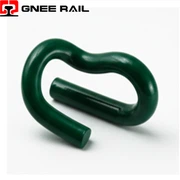
| Rail Clips | Flexible, elastic fasteners (e.g., E-clip, Pandrol clip) that provide clamping force. |
| Rail Anchors | Applied to the base of the rail to prevent longitudinal movement (creep). |
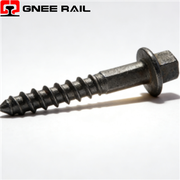
| Rail Spikes | Fasteners for securing rails, particularly on wooden sleepers (e.g., dog spikes, screw spikes). |
| Tie Plates / Baseplates | Plates placed between the rail and sleeper to distribute load and provide a secure base. |
| Rail Insulators / Pads | Used to isolate the rail electrically (for signaling) and reduce vibration, often used with concrete sleepers. |
- Track Stability: Tie plates, rail anchors, and gauge rods used to keep rail gauge, alignment, and surface in good condition.
- Joints: Insulated joints for circuit isolation and standard rail joint bars (fish plates) to connect rail ends.
Why use rail fixtures?
Rail fixtures and fastenings are essential to secure rails to sleepers, maintaining gauge, stability, and alignment while preventing lateral or longitudinal movement. They distribute heavy axle loads, reduce vibration, and allow for thermal expansion, which is critical for safety, efficiency, and preventing rail failure.
Key Reasons for Using Rail Fixtures:
- Stability and Safety: Fastenings hold rails securely to the sleepers, preventing them from spreading, overturning, or shifting under heavy loads and high-speed, dynamic forces.
- Gauge Maintenance: They keep the distance between the two rails (the gauge) consistent, which is crucial for preventing derailments.

- Load Distribution: Components like bearing plates distribute concentrated loads from trains over a wider area of the sleeper, reducing wear and preventing the rail from sinking into sleepers.
- Structural Integrity: They connect rail ends (via fish plates) and fasten them to the foundation (via spikes, bolts, and anchors), ensuring the track acts as a single, continuous system.

- Flexibility and Noise Reduction: Modern fastening systems provide necessary elasticity and reduce vibration, protecting both the track structure and reducing noise pollution.
- Preventing Rail Creep: Anchors and fasteners prevent the longitudinal movement of rails, known as "creep," caused by braking or accelerating trains.
- Thermal Management: They allow for safe expansion and contraction of rails due to temperature changes.
How to use rail fastening correctly?
Correct rail fastening involves positioning rail pads on sleepers, securing rails with clips or bolts to precise torque (e.g., 300-350 N·m) to prevent loosening. Key steps include cleaning components, ensuring proper gauge alignment, using insulating components to prevent electrical interference, and conducting regular inspections to check for damaged clips, loose bolts, or creeping, ensuring a secure, elastic, and properly aligned track system.

- Preparation: Clean the sleeper's rail seat and ensure no dirt or damage is present.
- Rail Pad Placement: Place the elastic pad directly onto the sleeper seat, ensuring it aligns perfectly where the rail base sits.
- Rail Positioning: Lower the steel rail onto the pad so it sits squarely.
Fastening Installation:
- Clips/Clamps: Place the clip over the rail with the nose touching the rail flange.

- Bolts/Nuts: Use special washers to distribute load, placing them with the flat surface upwards.
- Insulators: Install insulators to prevent rail-to-shoulder contact.
- Tightening (Torque Control): Tighten fasteners using a calibrated torque wrench to the manufacturer's specifications. For standard rails, this is often 300-350 N·m, and excessive torque should be avoided (e.g., keeping it under 147.10 N·m in some, or <100 N·m in others).
GNEE RAIL offers different kinds of railway fasteners to meet client's requirements, such as Elastic Rail Clip and Clamp, Rail Screw Spike, Plastic Dowel, High Tensile Track Bolt with Nut, Rail Base(Tie) Plate, Rail Fish Plate, Railway Shoulder(Insert), Fish Bolt, Railroad Rubber and EVA Pad, etc. Samples and drawings provided by customer, we will manufacture qualified products accordingly. We also deal with Steel Rail, Sleeper, Auto Bolt and other customized parts.
Click here to obtain the detailed product catalog of GNEE RAIL.