Why are rail joiners called fish plates?
Dec 31, 2025
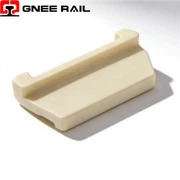
Railway fish plate, it is also called rail joint or joint bar. As one of the rail components, rail joint's function is different from other rail components. Rail joint is a flat metal plate usually used to connect adjacent two rails by a number of rail bolts or railroad spikes. Traditionally, railway fish plate is drilled with some holes on the ends of the sections to be connected. There are some holes in the end of railway track, which are used to be lined up with the holes in the railway fish plate and jointed with rail bolt. In general, railway fish plates are made of steel, but plastics and composites are alternative raw materials for rail joint.

Why are rail joiners called fish plates?
Rail joiners are called fish plates because their tapered, curved shape resembles the wooden "fishes" used to strengthen a ship's mast, a term derived from the French "ficher" (to fix/fasten) or simply due to their fish-like appearance when joining rails. These metal plates bolt to the sides of two rail ends, providing crucial support and alignment for smooth train passage, much like the original timber "fishes" reinforced ship masts.
Key points about the name and function:
- Origin in Shipbuilding: The term "fish" came from shipbuilding, where pieces of timber ("fishes") were clamped to the outside of a mast or spar to strengthen it, creating a built-up beam.
- French Connection: Some sources link "fish" to the Old French word ficher, meaning "to fix" or "to fasten," suggesting the name implies a fastening device.

- Visual Similarity: The angled, curved profile of early fish plates, with their tapered ends, looked like the profile of a fish or its tail fin.
- Function: Like their maritime counterparts, railway fish plates are flat bars that hold two rail ends together, ensuring horizontal and vertical alignment, transferring loads, and maintaining track integrity.
What is the working principle of a railroad joint?
A railroad joint's working principle is to mechanically connect two rail ends, maintaining alignment while allowing for thermal expansion/contraction and wear, typically using fishplates and bolts to bridge the gap, ensuring load transfer and a smooth path for trains, though modern railways increasingly use continuous welded rail (CWR) for better performance.
How Railway Fish Plate Works (Traditional Joint)
- Fishplates: These are steel bars (often four or six-holed) that fit over the web (vertical part) of the rail ends.
- Fishbolts & Nuts: Bolts pass through the holes in the fishplates and the aligned holes in the rail ends, clamping everything tightly together.

- Gap Management: A small gap is left between the rail ends to accommodate thermal expansion; as rails heat up, they lengthen and close this gap.
- Load Path: A wheel's load comes down on the head of the first rail, transfers through the fishplate to the second rail, and then down to the sleeper.
GNEE RAILWAY RAILWAY supply more than 30 types of rail joints, according to different standards:
- Rail joints for light rail: 8kg, 9kg, 12kg, 15kg, 18kg, 22kg, 24kg and 30kg
- Rail joints for heavy rail: 38kg, 43kg, 50kg and 60kg
- Rail joints for crane rail: QU70, QU80, QU100 and QU120

| Rail Type | Standard Length (mm) | Width (mm) | Thickness (mm) | Hole Diameter (mm) | Hole Spacing (mm) | Bolt Size | Material Options | |
|---|---|---|---|---|---|---|---|---|
| 43kg Rail Fishplate | 800 | 65 | 16 | 22 | 90/105 | M22 | Carbon Steel / Alloy Steel | |
| 50kg Rail Fishplate | 800 | 65 | 20 | 24 | 100/120 | M24 | Carbon Steel / Alloy Steel | |
| 60kg Rail Fishplate | 860 | 70 | 20 | 24 | 100/120 | M24 | Carbon Steel / Alloy Steel | |
| QU70 Crane Rail Fishplate | 760 | 70 | 20 | 24 | 90/105 | M24 | Carbon Steel / Alloy Steel | |
| QU80 Crane Rail Fishplate | 820 | 75 | 20 | 24 | 100/120 | M24 | Carbon Steel / Alloy Steel | |
| QU100 Crane Rail Fishplate | 950 | 80 | 22 | 26 | 105/125 | M27 | Carbon Steel / Alloy Steel | |
| QU120 Crane Rail Fishplate | 1050 | 85 | 26 | 26 | 110/130 | M27 | Carbon Steel / Alloy Steel |
GNEE RAILWAY RAILWAY supplies rail fishplates for light rail, heavy rail, and crane rail systems. Each model is manufactured to international railway standards and available in carbon steel, alloy steel, or customized materials to meet specific operational needs.
All fishplates undergo precision machining, heat treatment, and anti-corrosion surface processing, ensuring optimal clamping force, fatigue resistance, and long-term service life.