


Why Need Rail Pads For Railroad Track?
Nov 26, 2025
Why Need Rail Pads For Railroad Track?
Rail pads are needed for railroad tracks to protect the rail, sleeper, and subgrade by absorbing impact, reducing vibration, and distributing load from passing trains. This cushioning effect minimizes noise, prevents damage and fatigue to the track components, extends the life of the track, and reduces maintenance needs.
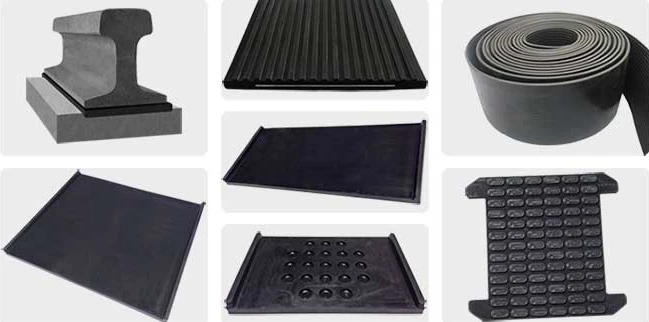
Key functions of rail pads
- Vibration and noise reduction: Rail pads act as a cushion that absorbs and dampens the noise and vibration produced by the high-speed movement of trains, making the ride smoother and quieter.
- Impact absorption: They protect the track structure from the high impact forces generated by heavy loads from passing trains.
- Load distribution: Pads spread the weight of the train over a larger surface area, reducing load concentration and stress on the sleepers and rail base.

- Fatigue prevention: By reducing stress, pads help prevent fatigue cracking in the concrete or other sleeper materials, especially in concrete tie systems.
- Component protection: They prevent wear on the base of the rail and the top of the sleeper, prolonging the life of the entire track system.
- Sealing: Some pads provide a sealing function between the rail and the support, preventing water and dirt from getting in.
Main Jobs of Rail Pads in Railways
Rail Pads have several big tasks:
- Cushioning Shocks: They soften the blow from heavy trains.
- Cutting Noise: They lower shakes and sounds, especially in cities.
- Spreading Weight: They share the train's load evenly.
- Insulating Electricity: They keep electric rail systems safe.
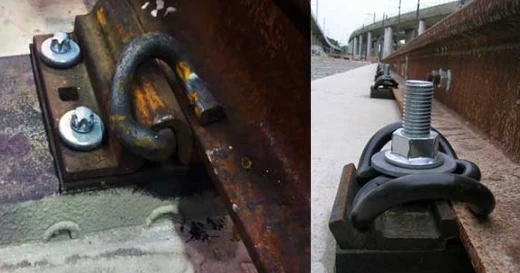
These jobs make Rail Pads super important. They keep railways safe and smooth.
Rail Pads Material
Rail pad is a kind of rail fasteners used between the rails and the tie plate, and it is usually made of elastic polyurethane mat. It is usually used under the rails and above the tie plate. Rubber rail pad can buffer the shake that the vehicles pushed on the tie plate and protect the tie plate and the sleeper from abrasion and impaction and prolong the service life of other fasteners.

| HDPE Rail Pad | |||
| Technical Parameter | Unit | Technical Requirement | Value |
| Density | g/cm3 | 0.95-0.98 | 0.95 |
| Tensile Strength | Mpa | ≥19 | 19 |
| Elongation | % | >80 | 150 |
| Melting Point | ℃ | 170-190 | 190 |
| Insulation Resistance | Ω | ≥1×10¹⁰ | 3.5 ×10¹⁰ |
| Hardness | A | ≥98 | 98(A) |
| EVA: Polyethylene 80%, Vinyl Acetate 20%. | |||
| Technical Parameter | Unit | Technical Requirement | Value |
| Density | g/cm3 | 0.95-0.98 | 0.95 |
| Tensile Strength | Mpa | ≥15 | 16 |
| Elongation | % | >500 | 550 |
| Melting Point | ℃ | 170-190 | 170 |
| Insulation Resistance | Ω | ≥1×10¹⁰ | 5.0 ×10¹⁰ |
| Hardness | A | ≥90 | 92(A) |
| Rubber Rail Pad | ||
| Technical Parameter | Unit | Value |
| Stiffness | KN | 90-130 |
| Hardness Shore A | ℃ | 72-80 degree |
| Electronic Resistance | Ω | ≥ 106 |
| Tensile Strength before Aging | Mpa | ≥12.5 |
| Elongation before Aging | % | ≥250 |
As a professional rail fastener manufacturer, GNEE RAILWAY RAILWAY can produce various types of rubber rail pads with different materials, such as natural rubber, EVA, HDPE and so on. Our EVA/HDPE/rubber rail pads are with high elasticity, applying to types for rails such as rail UIC54, UIC60, BS80lbs,BS100lbs, and sizes as ordered. The pads can be customized with or without grooves, in various possible designs, depending on customers' requirements.


