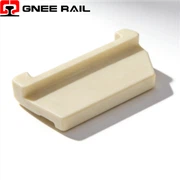
Definition of Rail Pad
Dec 19, 2025
A rail pad is the elastic component installed between the rail and the sleeper or baseplate in a rail fastening system. It is the interface that transfers the wheel load from the rail into the supporting structure while adding controlled elasticity to the track. Rail pads are used on concrete sleepers, on baseplate systems and on ballastless track, and they are one of the wearing parts that are inspected and replaced during track maintenance.
Functions of a Rail Pad
Load distribution: the pad spreads the concentrated wheel load from the rail base over a larger area of the sleeper or baseplate, reducing contact pressure and preventing localised crushing.
Vibration and impact damping: the elasticity of the pad absorbs impacts from the wheels and reduces vibration transmitted into the sleeper, the ballast and the surrounding structure.
Electrical insulation: the pad separates the rail from the sleeper and the fastening hardware, maintaining the electrical insulation required for track circuits.
Protection: by cushioning the rail-sleeper interface, the pad reduces wear of the rail base, the sleeper seat and the fastening components.
Force transfer: the friction between the pad and the rail base contributes to the longitudinal and lateral restraint of the rail.
Materials Used
Rail pads are manufactured from elastomeric and plastic materials. The most common families are:
Rubber compounds (natural rubber, SBR, EPDM, neoprene), which provide high elasticity and damping.
EVA (ethylene-vinyl acetate), an economical foam-like material with good cushioning.
HDPE (high-density polyethylene), a stiff plastic with high wear resistance and low water absorption.
TPU (thermoplastic polyurethane) and cork-filled rubber for special stiffness and damping requirements.
The material, together with the pad geometry, determines the static and dynamic stiffness of the fastening system, which is specified by the system designer for the track category.
Types of Rail Pad
Rail pads are grouped by their surface geometry:
Flat pads: a plain sheet profile, used where the fastening system provides the location.
Grooved pads: with channels in the surface for clip toe clearance and debris escape, typical of elastic clip fastenings on concrete sleepers.
Studded pads: with raised studs or ribs that locate the pad into the tie plate or sleeper seat, typical of baseplate systems.
Some designs combine grooves and studs to meet the requirements of a specific fastening system.
Where Rail Pads Are Used
Rail pads are used in every type of track with a resilient fastening:
Ballasted track on concrete sleepers, under the rail in the sleeper seat.
Ballastless and slab track, where the pad is part of the fastening system between rail and concrete base.
Heavy-haul and industrial track, where pads protect the sleepers from the high wheel pressures of heavy loads.
Metro and tram systems, where pads contribute to vibration and noise control.
How to Specify a Rail Pad
When specifying a rail pad, the following parameters are defined:
The fastening system type and the rail section it is used with.
The pad dimensions (length, width, thickness) and the surface geometry.
The static and dynamic stiffness range at the specified load.
The electrical resistance requirement of the track circuit.
The material and its resistance to the site environment (water, oil, UV, temperature).
The pad should be supplied and tested together with the fastening system so that the stiffness values of the complete assembly match the design.
FAQ
What is a rail pad in simple terms?
It is the elastic layer between the rail and the sleeper or baseplate that spreads the wheel load, damps vibration and insulates the rail electrically.
What happens if a rail pad is missing?
The rail bears directly on concrete or steel, causing localised crushing of the sleeper seat, rapid wear of the rail base and higher vibration. The fastening system loses its designed stiffness.
What materials are rail pads made of?
Rubber compounds, EVA, HDPE, TPU and cork-filled rubber are the common families; the choice depends on the stiffness, damping and environmental requirements.
What is the difference between grooved and studded rail pads?
Grooved pads have channels for clip clearance and debris escape; studded pads have raised studs that locate the pad into the tie plate or sleeper seat. The type must match the fastening system.
How long does a rail pad last?
Pad life depends on traffic, environment and the system design. Pads are replaced on condition during maintenance when they show hardening, cracking or permanent deformation beyond the allowed limit.
Can rail pads be reused?
No. Once removed, a pad should be replaced with a new one, because the old pad has taken a permanent set and no longer provides the specified stiffness.