


What is the lifespan of a KP140 Crane Rall?
May 14, 2026
What is the lifespan of a KP140 Crane Rail?
The service life of a KP140 crane rail typically ranges from 10 to 25 years, though in industrial engineering, lifespan is more accurately measured by cumulative tonnage throughput and wear millimetres rather than years.
Because the KP140 is a specialized heavyweight profile (141.7 kg/m), it is built for extreme durability. Its actual longevity is determined by the following technical factors:
1. Permissible Wear Limits
Under GOST and international engineering standards, the "useful life" ends when the rail reaches specific wear thresholds:
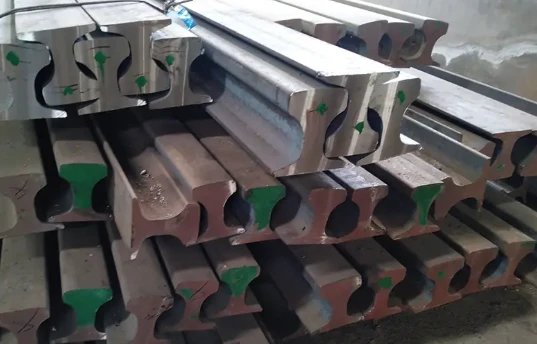
- Vertical Head Wear: Once the head height decreases by approximately 15% to 20%, the structural integrity for supporting peak wheel loads is compromised.
- Lateral (Side) Wear: Excessive side wear from crane skewing can lead to flange climb or track gauge widening, necessitating replacement for safety.
2. Operational Duty Cycle
- High-Intensity (Port Terminals): In 24/7 environments like STS (Ship-to-Shore) container berths, the constant friction and high speeds may result in a lifespan of 10–12 years.
- Medium-Intensity (Industrial Warehousing): In steel mills or heavy assembly plants where the crane operates intermittently, a KP140 track can comfortably exceed 20 years.
3. Metallurgical Grade and Hardness
The choice of steel grade significantly impacts the wear rate:
- Standard U71Mn: Provides a balanced pearlitic structure with good toughness.
- Head-Hardened (HH) Grades: If the rail is heat-treated to a hardness of 320–380 HB, it can offer up to 50% more wear resistance compared to standard grades, extending the replacement cycle significantly.
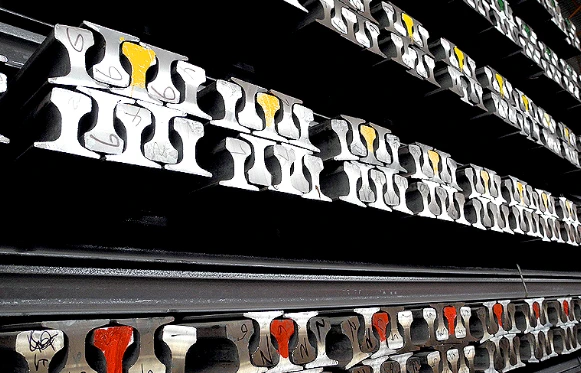
| Mechanical Property | Chemical Composition (%) | |||||||||||||
| U71Mn | Yield strength | Tensile strength | Elongation | Hardness | C | Si | Mn | S | P | Cr | Ni | Cu | ||
| MPa | kg/mm² | MPa | kg/mm² | min | HBW | |||||||||
| ≥390 | ≥40 | ≥880 | 9% | 0.65-0.76 | 0.15-0.35 | 1.10-1.40 | ≤0.030 | ≤0.030 | ≤0.250 | ≤0.250 | ≤0.250 | |||
How to Extend the Service Life of KP140 Crane Rail?
Extending the service life of KP140 crane rails is a matter of mitigating the extreme mechanical stresses inherent in heavy-duty lifting. Because the KP140 profile handles some of the highest wheel loads in the industry, maintenance must be proactive rather than reactive.
Here are the primary technical strategies to maximize the longevity of your rail infrastructure:
1. Implement a Flexible Mounting System
A rigid installation is the most common cause of premature rail failure. The KP140's mass (141.7 kg/m) creates immense impact forces that can crack the rail base or destroy the concrete grout if not dampened.
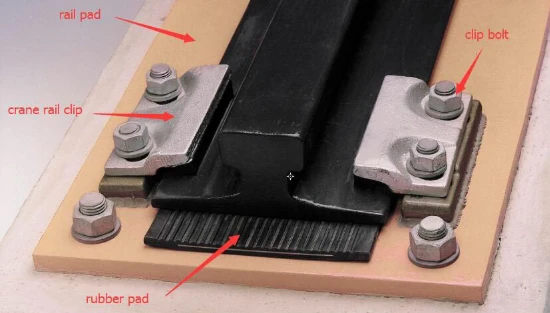
- Reinforced Rubber Pads: Use synthetic elastomer pads between the rail and the soleplate. These pads distribute the wheel load over a larger surface area and reduce vibration by up to 40%.
- Adjustable Clips: Use weldable, two-part clips with rubber noses. These allow for thermal expansion and slight vertical movement, preventing the "buckling" or "fatigue cracking" that occurs with rigid bolting.
2. Precision Alignment and Gauging
Even minor misalignments cause "crane skewing" (crabbing), where the wheel flanges grind against the side of the rail head.
- Tolerance Control: Ensure the track gauge deviation is kept within ±2–3 mm over the entire run.
- Laser Alignment: Conduct annual laser surveys to check for settlement or lateral shifting.
3. Surface Maintenance: Grinding and Lubrication
Surface irregularities accelerate wear through dynamic impact.
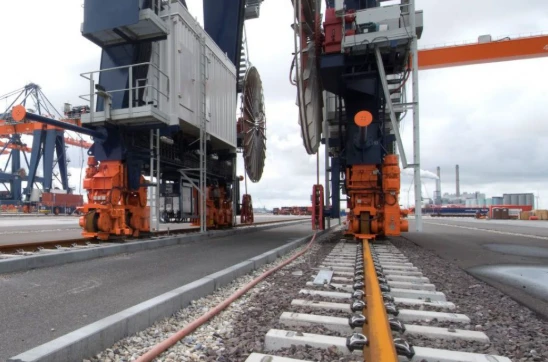
- Periodic Rail Grinding: Use a rail grinding machine to remove "corrugations" (wavy surface patterns) and plastic deformation at the head. This restores the original profile and prevents cracks from propagating into the web.
- Flange Lubrication: Install automatic lubrication systems on the crane wheels. This reduces metal-on-metal friction during lateral movement, which is the primary cause of side wear in port terminals.
FAQ
1. How often should I inspect my KP140 Steel Rails for wear?
For high-traffic environments like ports, a visual inspection should be conducted monthly, with a full technical survey (including ultrasonic testing and alignment checks) performed annually to ensure the GOST KP140 crane rail remains within safety tolerances.
2. What is the maximum allowable wear for a KP140 Rail?
Generally, a KP140 Rail is considered for replacement when the vertical wear on the head exceeds 15% of the original height or when the lateral wear affects the safety of the crane flange. Specific limits depend on the crane manufacturer's requirements.
3. Can rail grinding help extend the life of KR140 rails?
Yes, periodic rail grinding removes surface fatigue layers and "rolling contact fatigue" cracks before they penetrate deeper into the KP140 Crane Rail Material Strength zone, significantly extending the time before replacement is needed.
4. Why does GNEE RAILWAY RAILWAY recommend U71Mn for KP140 rails?
U71Mn GOST KP140 crane rail steel offers the best balance of work-hardening and toughness. It is specifically designed to handle the heavy, slow-moving loads of cranes without cracking or excessive deformation over decades of use.
5. How do rubber pads affect the lifespan of the GOST Standard Rail KP140?
Rubber pads act as a shock absorber. They reduce the stress on the rail base and the supporting structure by up to 50%, preventing the KP140 Rail Dimensions from becoming distorted due to repetitive impact loads.
6. Is it possible to repair a cracked KP140 Rail?
Minor surface cracks can sometimes be ground out, but any significant structural crack in the RAIL KP 140 requires the section to be cut out and replaced with a new rail length to maintain the safety and integrity of the crane system.
Get a Quote in 24 Hours
If you are looking to maximize the service life of your infrastructure, GNEE RAILWAY RAILWAY offers the engineering expertise and manufacturing precision required for long-lasting KP140 Crane Rail installations. We provide comprehensive material certifications and technical support to ensure your project utilizes the most durable steel profiles available.
Contact Us to discuss your specific load requirements and environmental challenges. Our team can help you select the optimal KP140 Rail length and fastening systems to ensure a lifespan that meets or exceeds your project goals.


