What are the different types of steel rail?
Jan 22, 2026
A steel rail is a precisely engineered metal beam designed to carry and guide the wheels of trains, industrial cranes, or rail-bound vehicles. Its specialized cross-sectional shape distributes dynamic loads from vehicles to sleepers and track foundations while providing a durable, low-friction surface to resist wear and deformation.
What are the different types of steel rail?
Steel rails are classified according to their application, profile, and load-bearing capacity. Each type is engineered for specific operational conditions, from heavy freight lines to light industrial tracks:
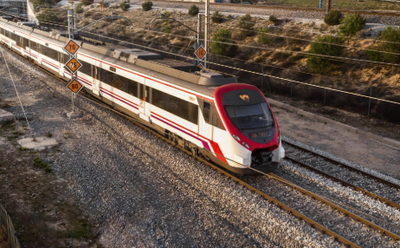
- Train Rails: These are mainline rails designed for passenger and freight trains. They include light rails (8–30 kg/m) for urban or regional lines and heavy-duty rails (38–60 kg/m) for mainline high-speed or heavy freight routes. Standard profiles include UIC50/54/60, BS11, AREMA/ASCE 25–175 lb, and AS1085 series.
GB Standard Steel Rail:
| Classification | Height(mm) | Head (mm) | Bottom (mm) | Thick(mm) | Weight (kg/m) | |
| Light Rail | 8 KG/M | 65 | 25 | 54 | 7 | 8.42 |
| 9 KG/M | 63.5 | 32.1 | 63.5 | 5.9 | 8.94 | |
| 12 KG/M | 69.85 | 38.1 | 69.85 | 7.54 | 12.2 | |
| 15 KG/M | 79.37 | 42.86 | 79.37 | 8.33 | 15.2 | |
| 18 KG/M | 80 | 40 | 80 | 10 | 18.06 | |
| 22 KG/M | 93.66 | 50.8 | 93.66 | 10.72 | 22.3 | |
| 24 KG/M | 107 | 51 | 90 | 10.9 | 24.46 | |
| 30 KG/M | 107.95 | 60.33 | 107.95 | 12.3 | 30.1 | |
| Heavy Rail | 38 KG/M | 134 | 68 | 114 | 13 | 38.733 |
| 43 KG/M | 140 | 70 | 114 | 14.5 | 44.653 | |
| 45 KG/M | 145 | 67 | 126 | 14.5 | 45.546 | |
| 50 KG/M | 152 | 70 | 132 | 15.5 | 51.514 | |
| 60 KG/M | 176 | 73 | 150 | 16.5 | 60.64 | |
UIC 860 Standard Steel Rail:
| Standard: UIC860 | ||||||
|---|---|---|---|---|---|---|
| Size | Dimension(mm) | Weight (kg/m) |
Length(m) | |||
| Head | Height | Bottom | Thickness | |||
| UIC50 | 70 | 152 | 125 | 15 | 50.46 | 12-25 |
| UIC54 | 70 | 159 | 140 | 16 | 54.43 | |
| UIC60 | 74.3 | 172 | 150 | 16.5 | 60.21 | |
BS11:1985 Standard Steel Rail:
| Standard: BS11:1985 | ||||||
|---|---|---|---|---|---|---|
| Size | Dimension(mm) | Weight (kg/m) |
Length(m) | |||
| Head | Height | Bottom | Thickness | |||
| 50 O | 52.39 | 100.01 | 100.01 | 10.32 | 24.833 | 6-18 |
| 60 A | 57.15 | 114.3 | 109.54 | 11.11 | 30.618 | |
| 75 A | 61.91 | 128.59 | 114.3 | 12.7 | 37.455 | 8-25 |
| 75 R | 61.91 | 128.59 | 122.24 | 13.1 | 37.041 | |
| 80 A | 63.5 | 133.35 | 117.47 | 13.1 | 39.761 | |
| 80 R | 63.5 | 133.35 | 127 | 13.49 | 39.674 | |
| 90 A | 66.67 | 142.88 | 127 | 13.89 | 45.099 | |
| 100 A | 69.85 | 152.4 | 133.35 | 15.08 | 50.182 | |
| 113 A | 69.85 | 158.75 | 139.7 | 20 | 56.398 | |
American Standard Steel Rail:
| ASTM standard, AREMA standard | ||||||
|---|---|---|---|---|---|---|
| Size | Dimension(mm) | Weight (kg/m) |
Length(m) | |||
| Head | Height | Foot | Thickness | |||
| ASCE 25 | 38.1 | 69.85 | 69.85 | 7.54 | 12.4 | 6-12 |
| ASCE 30 | 42.86 | 79.38 | 79.38 | 8.33 | 14.88 | |
| ASCE 40 | 47.62 | 88.9 | 88.9 | 9.92 | 19.84 | |
| ASCE 60 | 60.32 | 107.95 | 107.95 | 12.3 | 29.76 | |
| ASCE 75 | 62.71 | 122.24 | 122.24 | 13.49 | 37.2 | 12-25 |
| ASCE 85 | 65.09 | 131.76 | 131.76 | 14.29 | 42.17 | |
| ASCE 90 | 69.09 | 130.18 | 142.88 | 14.29 | 44.65 | |
| ASCE 115 | 69.06 | 139.7 | 168.28 | 15.88 | 56.9 | |
| ASCE 136 | 74.61 | 152.4 | 185.74 | 17.46 | 67.41 | |
| ASCE 175 | 109.86 | 152.4 | 152.4 | 38.1 | 86.8 | |
- Crane Rails: Specialized rails for industrial cranes and material handling systems. They are designed to handle concentrated wheel loads and lateral forces. Typical models include QU70/80/100/120 and DIN 536 series (A55–A120). Crane rails are usually manufactured from U71Mn or similar high-strength steels for wear resistance.

| Classification | Height(mm) | Head (mm) | Bottom (mm) | Thick(mm) | Weight (kg/m) | |
| Crane Rail | QU 70 | 120 | 70 | 120 | 28 | 52.8 |
| QU 80 | 130 | 80 | 130 | 32 | 63.69 | |
| QU 100 | 150 | 100 | 150 | 38 | 88.96 | |
| QU 120 | 170 | 120 | 170 | 44 | 118.1 | |
- Mining Rails: Rails used in underground mining operations or material extraction facilities. They are typically heavier and highly wear-resistant to cope with abrasive conditions and irregular wheel loads. Materials often include 50Mn or other high-carbon steels.

- Specialty Rails: Custom-engineered rails for unique industrial or infrastructure needs, such as port handling, heavy machinery, or extreme environmental conditions. These rails may include heat-treated surfaces, corrosion-resistant alloys, or reinforced profiles.
GNEE RAIL provides a comprehensive selection of all these steel rail types, including QU and DIN crane rails, UIC mainline rails, flat bar rails, and customized solutions to meet industrial requirements. They also supply complete rail system support, including fasteners, technical installation guidance, and aftermarket services, ensuring safe and durable rail operation.