What Are the Engineering Benefits of the 136RE Rail Section?
Apr 14, 2026
What Are the Engineering Benefits of the 136RE Rail Section?
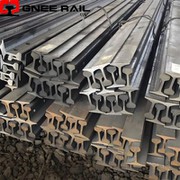
AREMA 136RE rail is chosen for heavy-haul tracks due to its high strength, superior wear resistance, and optimized structural design, allowing it to handle extreme axle loads. As a standard 136 lb/yd rail, it offers high durability, reduces maintenance costs in high-traffic, heavy-haul, and mining applications.
- High Structural Strength and Load Capacity:One of the main engineering advantages of the 136RE rail section is its high load-bearing capacity. The relatively large 136RE rail cross section area increases resistance to bending and deformation under heavy axle loads. This allows the AREMA 136RE rail to maintain structural integrity even in continuous heavy haul operations, reducing the risk of rail failure.
136re rail dimensions:

| Profile | Standard | Dimensions mm | Section S | Mass m | ||||
|---|---|---|---|---|---|---|---|---|
| H | B | C | D | E | cm² | kg/m | ||
| American standard | ||||||||
| 136RE (TR68) | AREMA | 185,70 | 152,40 | 74,60 | 49,20 | 17,50 | 85,90 | 67,50 |
- Optimized Stress Distribution:The 136RE rail profile is engineered to distribute stresses efficiently from the rail head through the web to the base. This optimized geometry reduces stress concentration and minimizes fatigue damage over time. As a result, the 136RE heavy rail performs reliably under repeated loading cycles, which is critical for long-term railway operation.
- Improved Wear Resistance and Fatigue Life:The rail head design in the 136RE rail section enhances resistance to wear and rolling contact fatigue. Combined with high-strength materials used in 136RE steel rail, this ensures that the rail maintains its shape and performance over extended service periods, reducing maintenance frequency and replacement costs.
Chemical Composition of AREMA Rail Steel:

| AERMA 2019 | Strength Grade | C | Si | Mn | P | S | Ni | Cr | V |
|---|---|---|---|---|---|---|---|---|---|
| Carbon Steel | 0.74–0.86 | 0.10–0.60 | 0.75–1.25 | ≤0.020 | ≤0.020 | ≤0.25 | ≤0.30 | ≤0.010 | |
| Low Alloy Steel | Standard Strength (SS) | 0.72–0.82 | 0.10–0.50 | 0.80–1.10 | ≤0.020 | ≤0.020 | ≤0.15 | 0.25–0.40 | ≤0.010 |
| Intermediate Strength (IS) | 0.72–0.82 | 0.10–1.00 | 0.70–1.25 | ≤0.020 | ≤0.020 | ≤0.15 | 0.40–0.70 | ≤0.010 | |
| High Strength / Head Hardened (HH) | 0.72–0.82 | 0.10–1.00 | 0.70–1.25 | ≤0.020 | ≤0.020 | ≤0.15 | 0.40–0.70 | ≤0.010 |
Mechanical Properties of AREMA Rail Steel:
| AREMA 2019 | Strength Grade | Yield Strength N/mm2 |
Tension Strength N/mm2 |
Elongation % |
Brinell Hardness HBW |
|---|---|---|---|---|---|
| Carbon Steel | Standard Strength (SS) | 511MIN | 983MIN | 10MIN | 310MIN |
| Intermediate Strength (IS) | 724MIN | 1069MIN | 10MIN | 350MIN | |
| High Strength / Head Hardened (HH) | 828MIN | 1179MIN | 10MIN | 370MIN | |
| Low Alloy Steel | Standard Strength (SS) | 511MIN | 983MIN | 10MIN | 310MIN |
| Intermediate Strength (IS) | 552MIN | 1014MIN | 8MIN | 325MIN | |
| High Strength / Head Hardened (HH) | 828MIN | 1179MIN | 10MIN | 370MIN |
- Enhanced Track Stability:The wide base and balanced geometry of the 136RE rail profile contribute to improved track stability. Loads are distributed evenly onto sleepers and fastening systems, helping maintain alignment and reducing the likelihood of track deformation. This is especially important in high-load and high-speed applications.
- Compatibility with Standard Systems:Another key benefit of the AREMA 136RE rail is its compatibility with widely used railway standards and fastening systems. The standardized 136RE rail dimensions allow for seamless integration into existing infrastructure, simplifying design, installation, and maintenance processes.
- Cost Efficiency Over Lifecycle:Although the initial investment in 136 lb rail may be higher than lighter rail sections, its durability and reduced maintenance requirements result in lower overall lifecycle costs. The extended service life of the 136RE rail section makes it a cost-effective solution for long-term railway projects.
FAQ
1. Why is 136RE rail widely used in engineering projects?
The 136RE rail section offers high strength, a large cross section area, and excellent durability, making it suitable for heavy loads and long-term railway operation.
2. How does the rail profile improve performance?
The optimized 136RE rail profile ensures efficient stress distribution and reduces wear, which improves both safety and service life.
3. Is 136RE rail suitable for high-speed railways?
Yes, the combination of stable rail dimensions and strong material properties makes it suitable for both heavy haul and high-speed applications.
4. What makes 136RE rail cost-effective?
Its long service life and reduced maintenance needs help lower total lifecycle costs compared to lighter rail sections.
5. Can 136RE rail be customized for engineering projects?
Yes, GNEE RAIL can provide processing such as cutting and drilling based on project requirements while maintaining standard specifications.
Selecting the right rail section is critical for engineering success. When evaluating 136RE rail section, 136RE rail profile, and 136RE rail cross section area, practical support and consistent quality can make a real difference.
With GNEE RAIL, you can access reliable 136RE steel rail, detailed technical data, and processing support tailored to your project. You can contact GNEE RAIL to discuss your requirements and obtain targeted rail solutions that help ensure safe, efficient, and long-lasting railway performance.