What are the common problems with fish plates?
Dec 31, 2025
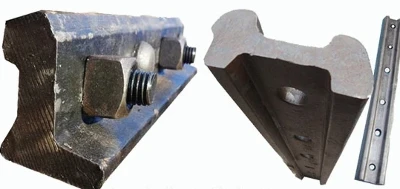
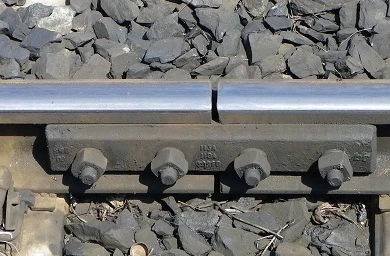
Railway fish plate, it is also called rail joint or joint bar. As one of the rail components, rail joint's function is different from other rail components. Rail joint is a flat metal plate usually used to connect adjacent two rails by a number of rail bolts or railroad spikes. Traditionally, railway fish plate is drilled with some holes on the ends of the sections to be connected. There are some holes in the end of railway track, which are used to be lined up with the holes in the railway fish plate and jointed with rail bolt. In general, railway fish plates are made of steel, but plastics and composites are alternative raw materials for rail joint.
What are the common problems with fish plates?
Common problems with railway fish plates include bolt loosening from vibration, corrosion (rusting) due to moisture, wear and tear from train impacts, material/manufacturing defects causing cracks, and issues from extreme temperature changes (expansion/contraction) leading to misalignment or stress. These issues can reduce track stability, increase noise, and pose significant safety risks like derailment if not properly maintained.
Key Problems & Causes:
- Bolt Slackening: Constant train vibrations loosen bolts, reducing the fish plate's grip, leading to joint movement and potential deformation.
- Corrosion & Wear: Exposure to rain, humidity, and salt causes rust, weakening the metal. Friction from wheels also wears down the plate and rail contact points.
- Material Defects: Poor quality steel or manufacturing flaws (like internal pores) create weak spots, making plates brittle and prone to cracking or breaking under load.
- Temperature Extremes: Metal expands and contracts with heat/cold, putting stress on joints, which can cause plates to shift or fail if not properly designed for the climate.
- Improper Fit: Using the wrong fish plate profile for the rail type or issues with surface contact can create gaps, affecting load transfer and increasing wear.
- Impact Damage: Heavy loads and repeated train passes create high impact forces, accelerating wear, thinning the plates, and causing surface cracks.
Main Types for Fish Plates
They can be classified by applicable rail type into light rail fishplates, heavy rail fishplates, and crane rail fishplates; by structural form into standard fishplates and special-shaped fishplates; and by function into insulated fishplates and non-insulated fishplates.
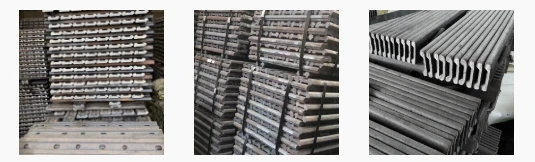
GNEE RAILWAY RAILWAY offer 4 holed or 6 holed fish plate to suit 60 kg, UIC, 54 kg UIC, 52 kg UIC, 52 kg, 50N, JIS 50N, 90A, 90R, 80A, 115 RE, 132 RE, 50R rails, etc.
Classification by Applicable Rail Weight (rail type)
| Application | Fishplate Types |
|---|---|
| Rail Joints for Light Rail | 8kg, 9kg, 12kg, 15kg, 18kg, 22kg, 24kg and 30kg |
| Rail Joints for Heavy Rail | 38kg, 43kg, 50kg and 60kg |
| Rail Joints for Crane Rail | QU70, QU80, QU100 and QU120 |
Classification by Functional Requirements
According to the special functions of the track (such as insulation and high strength), fishplates can be divided into:
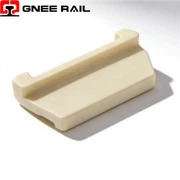
- Insulated Fishplates: Made from insulating materials (e.g., glass fiber reinforced plastic) or metal fishplates coated with an insulating layer. They are used at rail joints in electrified railways to prevent electrical conductivity that could interfere with signaling systems, or in sections requiring electrical isolation.
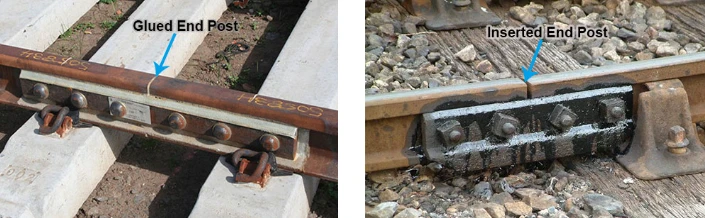
- Non-Insulated Fishplates: Standard metal fishplates without insulation, suitable for non-electrified railways or tracks that do not require electrical isolation.
Classification by Structural Form
- Standard Fishplates: These have a flat plate shape with bolt holes on both sides, designed to fit the straight joints of standard rails. This is the most commonly used type.
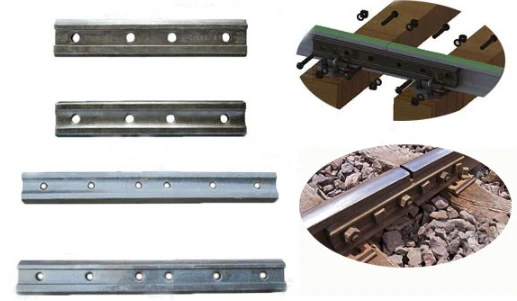
- Special-Shaped Fishplates: Also known as "special fishplates," their shape is designed based on the specific angles of rail joints (e.g., curved tracks) or uniquely shaped rails. They are used for non-linear tracks (such as railway curves) or rails with special cross-sections to ensure smoothness at the joints.
GNEE RAILWAY RAILWAY can provide you with different rail joints such as GB, AREMA, BS, UIC, AS, African standard, South American standard, and different types such as common rail joint, compromise rail joint, bulge rail joint, insulated rail joint and glued insulated rail joint, etc. Our products have been exported to more than 20 countries and areas and more than 50 types of rail joints of standard and nonstandard are available for global customers.