What Is a Rail Elastic Clip? Types, Materials and Manufacturing
Dec 01, 2025
What Is a Rail Elastic Clip?
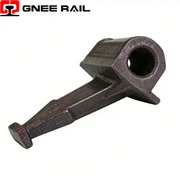
A rail elastic clip is one of the most widely used fastening parts in railway track. It keeps the rail fixed on the sleepers - both wooden and concrete - by pressing the rail foot down with a controlled clamping force while absorbing dynamic loads from passing trains. The result is stable track geometry, lower maintenance and a long service life for the fastening system. Elastic clips are manufactured from forged spring steel using a hot forging process, which gives a uniform microstructure and consistent performance.
E-Type Clips
| Model | Type III | E1609 | E1809 | E1804 | E1806 | E1813 | E2001 |
|---|---|---|---|---|---|---|---|
| Bar diameter | 18 mm | 16 mm | 20 mm | 18 mm | 18 mm | 18 mm | 20 mm |
| Hardness | 44-48 HRC | 44-48 HRC | 44-48 HRC | 44-48 HRC | 44-48 HRC | 44-48 HRC | 44-48 HRC |
| Model | E2007 | E2009 | E2039 | E2055 | E2056 | E2063 | E2091 |
|---|---|---|---|---|---|---|---|
| Bar diameter | 20 mm | 20 mm | 20 mm | 20 mm | 20 mm | 20 mm | 20 mm |
| Hardness | 44-48 HRC | 44-48 HRC | 44-48 HRC | 44-48 HRC | 44-48 HRC | 44-48 HRC | 44-48 HRC |
The complete E-type range covers E1609, E1809, E1813, E1817, E2001, E2006, E2007, E2009, E2039, E2055, E2056, E2063 and E2091.
studded-type Tension Clips
| Model | Type 1 | Type 3 | Type 12 | Type 14 |
|---|---|---|---|---|
| Bar diameter | 13 mm | 13 mm | 13 mm | 14 mm |
| Hardness | 42-47 HRC | 42-47 HRC | 42-47 HRC | 42-47 HRC |
The screw-fastened tension clips range covers Type 1, Type 3, Type 12, Type 14 and Type 75, used in studded-type fastening systems with screw spikes, plastic dowels and guide plates.
PR-Series Clips
| Model | PR85 | PR309A | PR401 | PR415 | PR601A |
|---|---|---|---|---|---|
| Bar diameter | 13 mm | 19 mm | 20 mm | 20 mm | 22 mm |
| Hardness | 44-48 HRC | 44-48 HRC | 44-48 HRC | 44-48 HRC | 44-48 HRC |
Other and Special Clips
| Type | Special clip | Russia-type clip | D-type clip | Anti-vandal clip | Fast-type clip | GL1419 |
|---|---|---|---|---|---|---|
| Bar diameter | 13 mm | 18 mm | 25 mm | 18 mm | 15 mm | 14 mm |
Other types include N clips, D-type rail clips, gauge lock clips and crane rail clips. Non-standard clips can be produced to customer drawings.
Manufacturing Process
The elastic rail clip manufacturing process follows these steps: raw material - shearing - heating - forming - hardening - tempering - inspection - packing. Hot-forged spring steel with controlled heat treatment gives the clip its consistent elasticity, clamping force and fatigue life.
Technical Requirements of an Elastic Fastening System
Provide sufficient elasticity to absorb vibrations and shocks caused by moving loads.
Maintain adequate toe load that does not reduce under service.
Be a fit-and-forget type requiring minimum maintenance.
Be reusable without losing its properties.
Have as few parts as possible, easy to manufacture, lay and maintain.
Resist removal, avoiding sabotage or theft.
Be of a universal type usable on wooden, steel or concrete sleepers where the system allows.
Be cost-effective with a long service life.
Frequently Asked Questions
1. What is the function of an elastic rail clip?
To hold the rail foot down on the sleeper or baseplate with a controlled clamping force while absorbing dynamic loads, keeping the track stable and reducing maintenance.
2. What steel are rail clips made from?
Spring steels such as 60Si2Mn, 60Si2Cr and 38Si7, forged and heat treated to hardnesses of 42-48 HRC depending on the clip type.
3. What is the difference between E-type and screw-fastened tension clips?
E-type clips are used in e-clip fastening systems with shoulders and insulators; screw-fastened tension clips are used in studded-type systems with screw spikes, dowels and guide plates. The two families are not interchangeable.
4. What toe load does an E-type clip provide?
Roughly 500-700 kgf for 16 mm bar, 750-900 kgf for 18 mm bar and 1100-1400 kgf for 20 mm bar, depending on model and system design.
5. How are rail clips manufactured?
By hot forging: shearing, heating, forming, hardening and tempering, then inspection and packing. Forging plus controlled heat treatment produces the uniform elasticity the clip needs.
6. Can non-standard rail clips be supplied?
Yes. Standard and non-standard clips can be manufactured to customer drawings, including special designs for specific rail profiles and fastening systems.