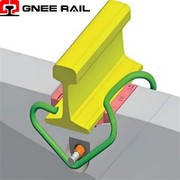
What is a fish bolt?
Nov 05, 2025
What Is a Fish Bolt?
Fish bolts are bolts for fastening fishplates. Railway fishplates are generally used at the joints of two rails on the railway to fix the two sections of steel rails together. The fish bolt is inserted through the matching holes of the fishplate and the rail web, and used in conjunction with nuts (and usually spring washers) to clamp the joint firmly. When purchasing, choose fish bolts that match the aperture size of the bolt holes and the thickness of the fishplate, so that the clamp length is correct and the joint stays tight under traffic.
Fish Bolt Specifications and Grades
Fish bolts are supplied in property classes 4.6, 5.6, 8.8 and 10.9, each with a defined material and mechanical performance:
| Grade | Material | Tensile Strength | Yield Strength | Elongation | Cold Bending |
|---|---|---|---|---|---|
| 4.6 | Q235 | 400 MPa min | 240 MPa min | 22% min | 90 degrees without crack |
| 5.6 | 35# | 500 MPa min | 300 MPa min | 20% min | 90 degrees without crack |
| 8.8 | 45#, 40Cr | 800 MPa min | 640 MPa min | 12% min | 90 degrees without crack |
| 10.9 | 40Cr, 20MnTiB | 1000 MPa min | 900 MPa min | 9% min | 90 degrees without crack |
Surface Treatment
Fish bolts are protected against corrosion by plain oiled, black oxide, zinc plating, hot-dip galvanizing (HDG), waxing, bitumen coating, Dacromet or sherardizing, depending on the climate and service environment. For coastal and high-humidity lines, HDG or Dacromet is recommended; for general use, plain oiled or black oxide is common and economical.
Standards and Sizes
Fish bolts are manufactured to standards such as UIC 864-2, GB, DIN, ISO, ANSI/ASTM, BS and JIS. Common sizes are M12 to M24 with lengths from 45 mm to 145 mm, or per customer request. The length must suit the fishplate and rail web thickness: too short a bolt cannot clamp the joint, and too long a bolt leaves excessive thread exposed. Non-standard designs can be produced when the buyer provides a drawing or sample.
Quality and Certification
Fish bolts for railway use are produced under quality management systems certified to ISO 9001 and, for export to Europe, CE-marked according to applicable directives. Mechanical testing of tensile strength, yield strength, elongation and cold bending is performed on each batch, and third-party inspection can be arranged at the buyer's request. Standards such as AREMA, BS, GB, UIC and DIN rail bolts are readily available, and production can be scheduled to the buyer's programme.
FAQ
What is a fish bolt?
A fish bolt is the bolt that fastens fishplates (joint bars) across the ends of two rails at a rail joint. It is used with a nut and usually a spring washer to clamp the joint tightly.
How do I choose the right fish bolt size?
Match the bolt diameter to the fishplate and rail bolt-hole aperture, and the length to the combined thickness of the fishplate, rail web and washer. Common sizes are M12-M24 with 45-145 mm lengths.
What is the difference between grades 4.6 and 8.8 fish bolts?
Grade 4.6 is a low-strength Q235 bolt for light duty; grade 8.8 (45# or 40Cr) has a minimum tensile strength of 800 MPa and is used on mainline and heavy-traffic joints. Grade 10.9 is used where maximum joint strength is required.
Which standards apply to fish bolts?
Fish bolts are commonly supplied to UIC 864-2, GB, DIN, ISO, ANSI/ASTM, BS and JIS standards, with UIC 864-2 covering fish bolts for rail joints on UIC-compliant track.
What surface treatments are available for fish bolts?
Plain oiled, black oxide, zinc plating, hot-dip galvanizing, waxing, bitumen, Dacromet and sherardizing are available. For humid or coastal lines, HDG or Dacromet gives the best corrosion protection.
What is the difference between a fish bolt and a track bolt?
A fish bolt clamps fishplates across a rail joint, while a track bolt is inserted through a hole in the sleeper (tie) with a fanged nut to fasten rails or rail chairs to the sleeper. They serve different parts of the track.