What Is the Role of a Rail Pad in Railway Fastener Systems?
Sep 23, 2025
The Role of the Rail Pad in the Fastening System
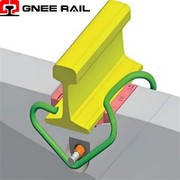
Railway pads are indispensable key components of modern railway fastening systems, typically installed between the rail and the sleeper. Their primary functions are to cushion the impacts and vibrations generated by train operation, distribute wheel loads, protect the rails and concrete or wooden sleepers, maintain the stability of track geometry, extend the overall service life of the track and reduce maintenance costs.
Within the complete fastening system, the pad works together with rail clips, rail bolts, rail nuts, gauge rods, tie plates, elastic rail clips and gauge blocks. It also cooperates with fishplates (rail joints), rail shoulders and rail clamps to keep the rail stable under heavy loads, temperature variations and dynamic train loads, providing the necessary elasticity for thermal expansion and contraction.
Materials and Typical Technical Data
GNEE RAILWAY RAILWAY develops high-performance elastic rail pads for applications from tram tracks to standard-gauge and heavy-haul railways, particularly for E-type elastic clip systems and studded rail fastening systems. The pads are produced from HDPE, EVA or rubber.
HDPE Rail Pad
| Parameter | Unit | Requirement | Typical value |
|---|---|---|---|
| Density | g/cm3 | 0.95-0.98 | 0.95 |
| Tensile strength | MPa | greater than or equal to 19 | 19 |
| Elongation | % | greater than 80 | 150 |
| Melting point | deg C | approx. 125-135 | - |
| Insulation resistance | ohm | greater than or equal to 1 x 10^10 | 3.5 x 10^10 |
| Hardness | Shore A | greater than or equal to 98 | 98 |
EVA Rail Pad (Polyethylene 80%, Vinyl Acetate 20%)
| Parameter | Unit | Requirement | Typical value |
|---|---|---|---|
| Density | g/cm3 | 0.95-0.98 | 0.95 |
| Tensile strength | MPa | greater than or equal to 15 | 16 |
| Elongation | % | greater than 500 | 550 |
| Melting point | deg C | approx. 65-90 (VA 20%) | - |
| Insulation resistance | ohm | greater than or equal to 1 x 10^10 | 5.0 x 10^10 |
| Hardness | Shore A | greater than or equal to 90 | 92 |
Rubber Rail Pad
| Parameter | Unit | Value |
|---|---|---|
| Static stiffness | kN | 90-130 |
| Hardness | Shore A | 72-80 |
| Electrical resistance | ohm | greater than or equal to 1 x 10^6 |
| Tensile strength before aging | MPa | greater than or equal to 12.5 |
| Elongation before aging | % | greater than or equal to 250 |
Why the Pad Is the Heart of Fastening Performance
The pad is the only elastic element in the load path that is dedicated to vertical damping. Its stiffness controls how much rail deflection occurs under each wheel, and its electrical resistance protects signalling. Choosing the correct material and stiffness for the fastening system is therefore a structural decision, not a supply detail: it affects sleeper life, rail life, ride quality and maintenance intervals.
FAQ
What is the main role of a rail pad in a fastening system?
To cushion impact and vibration, distribute wheel load over the sleeper seat, protect the rail and sleeper, maintain track geometry and extend track service life.
Which material should I choose for an insulating rail pad?
HDPE and EVA pads provide high insulation resistance (typically 1 x 10^10 ohm or more in test), while rubber pads offer the best damping and a wide temperature range. The choice depends on stiffness, insulation and climate requirements.
What is the typical hardness of a rubber rail pad?
Typical rubber rail pads have a Shore A hardness of 72-80 and a static stiffness of 90-130 kN as specified for mainline fastening systems.
How does pad stiffness affect track performance?
Higher stiffness gives better load distribution and stability for heavy axle loads; lower stiffness gives better vibration isolation for passenger comfort. The stiffness is matched to the fastening system design.
Are rail pads compatible with both E-type and studded fastening systems?
Yes. Pads are manufactured to suit E-type elastic clip systems and studded rail fastening systems, with dimensions matched to the rail foot and sleeper seat of each system.