


What materials are QU120 crane rail pads made of?
Sep 17, 2026

What materials are QU120 crane rail pads made of?
QU120 crane rail pads from GNEE RAILWAY are primarily made of synthetic rubber blends, with natural rubber combined with NBR for oil resistance, carbon black for reinforcement, and vulcanizing agents for improved crosslink density as the core formulation. PU composite rubber is also available for applications requiring superior wear resistance, while optional materials including SBR for high wear resistance and cost efficiency, and EVA for lightweight impact absorption can be selected based on specific project requirements. These material choices are tailored to the harsh operating conditions of QU120 crane rail systems, which typically handle heavy wheel loads, frequent start-stop cycles, and exposure to oil, dust, and temperature fluctuations in workshops, ports, and storage yards.
-
Material Performance and Structural Design
The synthetic rubber used for QU120 crane rail pads delivers comprehensive performance that matches the demands of heavy crane runway applications. It exhibits excellent wear resistance, compressive strength, antioxidant properties, UV resistance, and oil resistance, ensuring stable performance even in challenging indoor and partially outdoor environments. For long-span cranes that require higher rigidity, GNEE RAILWAY offers multi-layer composite structure pads with a rubber and steel mesh core, which enhances load-bearing capacity and extends service life.
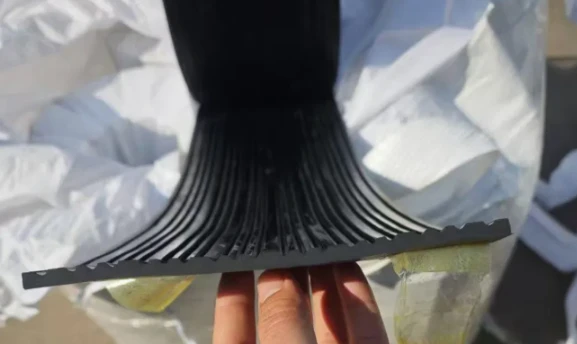
The pad structure features a slightly convex cross-section in the middle, which distributes force more evenly across the pad surface. A steel plate is embedded in the middle of the pad to bear greater pressure and further prolong its service life. The surface may be designed with diamond patterns or grooves to increase friction with both the rail and the foundation, providing anti-slip performance that keeps the rail securely positioned during crane operation. The thickness of QU120 crane rail pads ranges from 5 mm to 20 mm, adjusted according to the specific wheel load of the crane system to achieve optimal cushioning and support.
-
Core Functions of QU120 Crane Rail Pads
As a critical component between the QU120 crane rail and its supporting structure, the elastic rail pad serves multiple core functions that protect both the rail and the foundation. First, it provides shock absorption and vibration damping, absorbing vertical impacts and horizontal thrusts generated during crane starting, stopping, and turning, which reduces fatigue damage to the steel track and the concrete beam or steel structure foundation. Second, it offers leveling and conformity, compensating for minor unevenness in the rail foundation to ensure close contact between the rail and the base and prevent localized stress concentration. Third, it reduces noise and wear, lowering metal-to-metal friction noise and minimizing direct wear between the rail and the foundation.
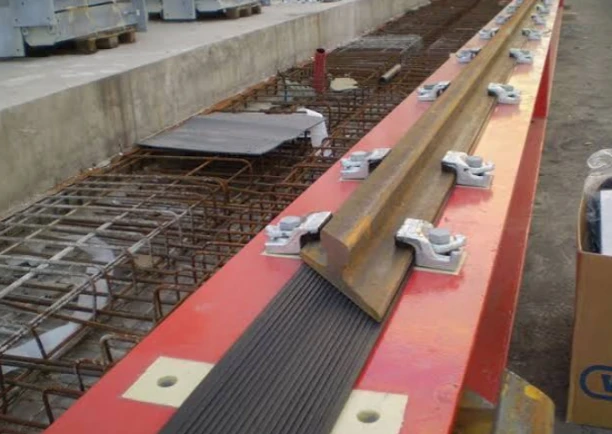
Additional benefits include reduced structural vibration, lower rail wear and fatigue stresses, decreased crane runway maintenance requirements, and reduced stress in both the runway structure and the crane itself. The pads are fully resistant to water, oil, grease, mildew, and fungus, and they distribute wheel loads over a larger surface area to protect the crane mechanism and increase the working life of wheels, bearings, and axles.
GNEE RAILWAY supplies QU120 crane rail pads that are compatible with all standard rail sizes and can be customized to meet specific project needs, with strict quality control applied to every batch to ensure consistent performance.
All QU120 crane rail pads from GNEE RAILWAY undergo rigorous quality testing to verify compression performance, elasticity, hardness, and wear resistance, ensuring they meet the required specifications for heavy crane applications. The production process follows ISO 9001 quality management system standards, with each batch accompanied by traceable quality documentation to support material verification and performance validation. Third-party inspection by SGS, BV, or TUV can also be arranged at any stage subject to agreement, providing additional assurance of product quality and consistency.
FAQ
- What is the standard thickness range for QU120 crane rail pads?
The standard thickness range for QU120 crane rail pads is 5 mm to 20 mm, with the specific thickness selected based on the wheel load of the crane system. Thicker pads provide more cushioning and insulation, while thinner pads maintain a lower profile for applications with limited clearance. All thickness options are designed to deliver optimal load distribution and vibration damping for QU120 rail systems.
- Can QU120 crane rail pads be used in outdoor environments?
Yes, QU120 crane rail pads are suitable for both indoor and partially outdoor environments, as their synthetic rubber material offers UV resistance, water resistance, and temperature stability across a wide range. The pads are also resistant to oil, grease, mildew, and fungus, making them durable in harsh industrial outdoor conditions. For extreme outdoor applications, customized material formulations can be provided to meet specific environmental requirements.
- How do I choose the right material for my QU120 crane rail pad?
Material selection for QU120 crane rail pads depends on your application's specific operating conditions. Standard synthetic rubber blends are suitable for most general heavy crane applications, offering balanced wear resistance, compressive strength, and cost efficiency. For environments with high oil exposure, NBR-blended pads are recommended, while PU composite rubber is ideal for applications requiring superior wear resistance. EVA pads are available for projects prioritizing lightweight impact absorption.
- What is the function of the grooves on some QU120 crane rail pad surfaces?
Grooves or diamond patterns on QU120 crane rail pad surfaces increase friction between the pad, the rail, and the foundation, providing anti-slip performance that keeps the rail securely positioned. Grooves also help achieve the required load-deflection characteristic, with low initial stiffness maintaining intimate contact with the rail and sufficient stiffness under wheel load preventing excessive movement. This design improves overall track stability and reduces wear on both the rail and the pad.


